Health and Safety Policy for Cleaners in E16
This Health and Safety policy sets out how our cleaning operations in E16 are planned, managed, and monitored to protect employees, clients, visitors, contractors, and members of the public. Our aim is to prevent accidents, work-related ill health, and damage to property through safe systems of work, appropriate training, and continuous improvement.
We recognise our responsibilities under relevant health and safety legislation and industry best practice. Health and safety performance is considered an integral part of providing high quality cleaning services and a core responsibility of management and staff at every level.
Policy Objectives
The objectives of this policy are to:
Identify, assess, and control risks associated with cleaning tasks and environments.
Provide and maintain safe equipment, cleaning materials, and working conditions.
Ensure all cleaners receive appropriate information, instruction, and training.
Promote a positive safety culture where hazards are reported and addressed promptly.
Prevent accidents, injuries, and occupational ill health related to cleaning activities.
Review and improve our health and safety arrangements on a regular basis.
Responsibilities
Management is responsible for implementing this policy, allocating adequate resources, and ensuring that risk assessments, procedures, and training are up to date and followed. Supervisors are responsible for day to day monitoring of safe working practices, conducting regular checks, and addressing any breaches or concerns immediately.
All cleaners must take reasonable care of their own health and safety and that of others who may be affected by their work. This includes following instructions and training, using personal protective equipment correctly, reporting hazards, defects, accidents, and near misses, and cooperating fully with health and safety requirements.
Risk Assessment and Safe Systems of Work
Risk assessments are carried out for all key cleaning tasks and for the typical environments where we work, such as homes, offices, shops, and communal areas. These assessments consider hazards including slips and trips, manual handling, use of chemicals, electrical equipment, work at height, lone working, and security.
Based on these assessments, safe systems of work are established and communicated to cleaners. These include clear procedures for setting up and removing warning signs, safe routes for equipment, correct lifting techniques, use of step stools or ladders, and restrictions on tasks that may only be carried out by trained personnel.
Chemical Safety and COSHH
Cleaning chemicals are selected to be effective while minimising risks. All substances are assessed under relevant control of substances regulations. Safety data is provided and communicated to staff in clear language.
Cleaners must always follow product instructions, never mix chemicals, and use only containers that are properly labelled. Decanting into unmarked bottles is prohibited. Chemicals are stored securely, kept away from children and vulnerable individuals, and never left unattended in public areas or on stairways. Ventilation requirements are followed at all times during use.
Personal Protective Equipment
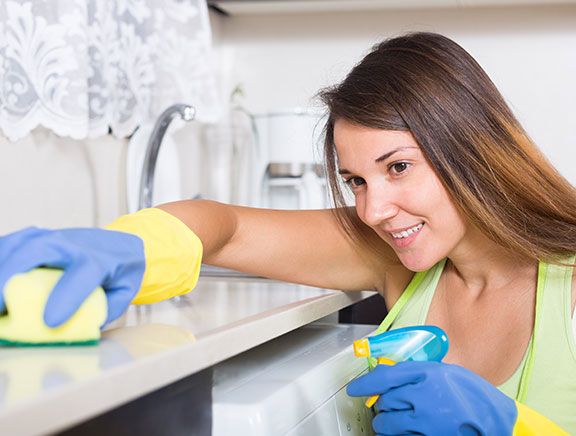
Appropriate personal protective equipment is provided based on the task and risk assessment. This may include gloves, masks or respirators where necessary, eye protection, aprons, and non slip footwear.
Cleaners are required to use PPE as instructed, keep it in good condition, and report any loss or damage immediately so that replacements can be arranged. PPE must never be shared where hygiene or safety may be compromised.
Equipment, Machinery, and Electrical Safety
All cleaning equipment, including vacuum cleaners, floor machines, and other electrical tools, is maintained in safe working order. Regular checks are carried out and defective or damaged items are removed from service immediately.
Cleaners must visually inspect equipment before use, ensure cables do not create trip hazards, avoid overloading sockets, and never use equipment in a way that has not been covered in training. Water and electricity are kept strictly separate to avoid the risk of electric shock.
Manual Handling and Ergonomics
Many cleaning tasks involve lifting, carrying, pushing, pulling, or repetitive movements. We aim to reduce manual handling risks by using trolleys, suitable tools, and lightweight equipment wherever possible and by planning work to avoid unnecessary strain.
Cleaners receive instruction on safe lifting techniques, correct posture, and how to adjust their methods to minimise discomfort. Any pain, strain, or early signs of musculoskeletal problems must be reported so that adjustments can be made.
Slips, Trips, and Falls
Slips and trips are a major risk in cleaning work. To minimise this risk, wet floor warning signs are used wherever there is a slip hazard and are removed promptly once floors are dry. Cables and equipment are positioned to keep walkways clear, and spillages are cleaned up immediately.
Where work at low height is necessary, only suitable, stable platforms, such as approved step stools or small ladders, may be used. Standing on chairs, tables, or unstable furniture is strictly prohibited.
Lone Working and Personal Security
Lone working arrangements are reviewed for sites where cleaners may be working alone or outside normal hours. Cleaners are instructed not to put themselves at risk, to maintain awareness of their surroundings, and to leave the premises if they feel unsafe.
Access and key holding arrangements are managed to maintain building security. Cleaners must keep keys, access cards, and client property secure and never allow unauthorised persons to enter a premises using company access.
Accidents, Incidents, and First Aid
All accidents, incidents, and near misses must be reported as soon as possible. Details are recorded, investigated, and used to improve procedures and prevent recurrence.
Where first aid resources are available on site, cleaners must know their location and how to access assistance. In the event of a serious incident or medical emergency, emergency services must be contacted immediately in line with training and site procedures.
Training, Communication, and Supervision
Induction training is provided to all new cleaners, covering general health and safety responsibilities, safe use of chemicals, manual handling, equipment operation, and site specific procedures. Refresher training is provided periodically and whenever tasks, equipment, or risks change.
Supervisors maintain ongoing communication with cleaners, conduct spot checks, and provide guidance where needed. Safety concerns, hazards, and suggestions for improvement are welcomed and are addressed without delay.
Monitoring, Review, and Continuous Improvement
This Health and Safety policy is monitored through regular inspections, review of incident reports, and feedback from staff and clients. Formal reviews of the policy and related procedures are carried out periodically and whenever there are significant changes in operations, legislation, or identified risks.
We are committed to continually improving our health and safety performance so that cleaning services in E16 are delivered reliably, professionally, and with care for everyone who may be affected by our work.